
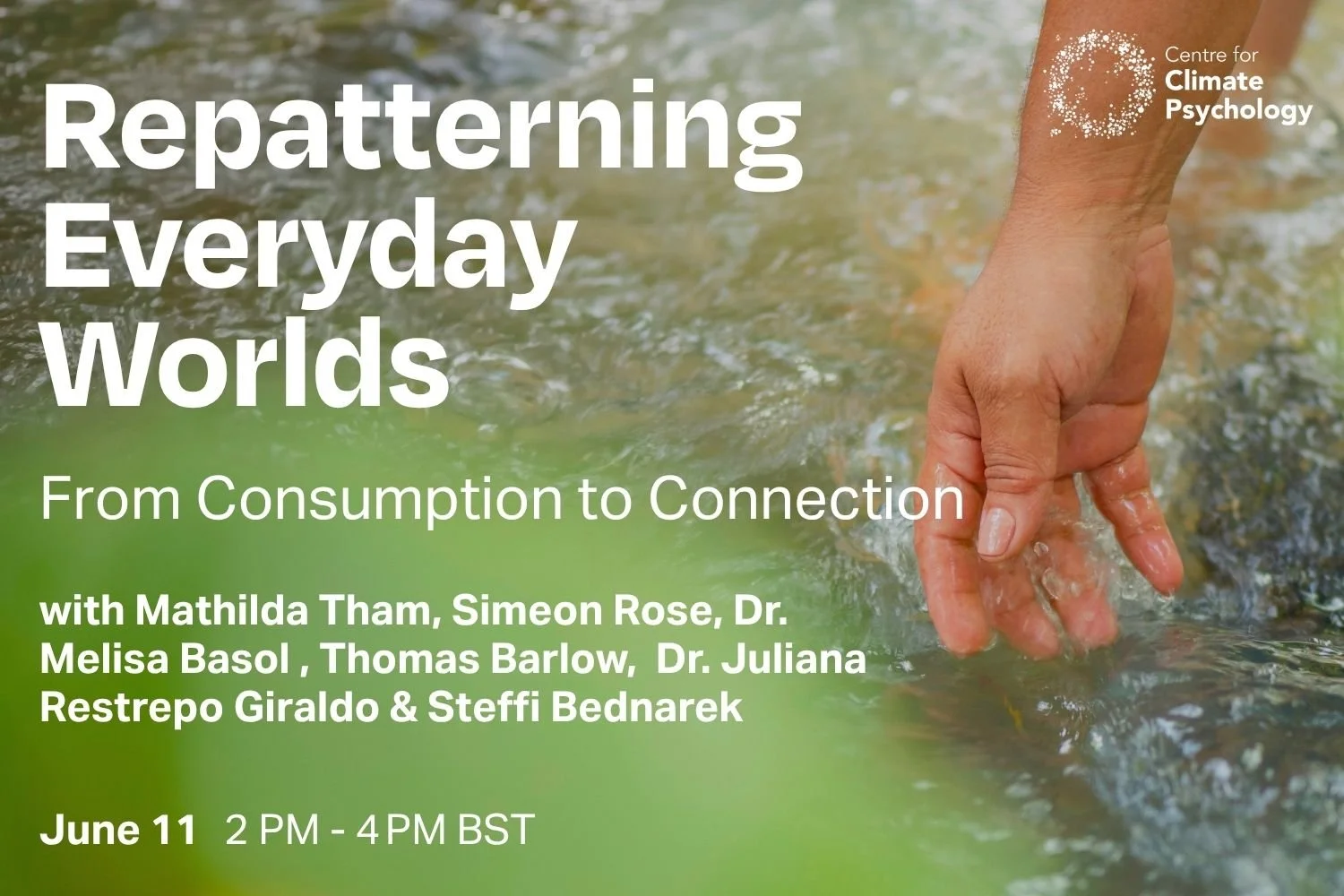
How does a mindset and heartset of consumption shape our mental, social, economic, and planetary health? And what becomes possible when we shift from consumption to connection as the basis for how we live, decide, and lead?
This event brings together a group of thinkers and practitioners working across psychology, art, activism, design, and systems change to explore how everyday and often invisible patterns structure our worlds. From digital environments to domestic life, from policy to culture, the logics of extraction and consumption are deeply embedded. Luckily, however, they aren’t fixed.
Together, the speakers open up a space to examine how these patterns are formed, maintained, and—crucially—how they might be repatterned.
What shapes a culture of consumption?
Melisa Basol brings insight from social psychology and large-scale behavioural interventions, showing how our beliefs, decisions, and perceptions are shaped in digital environments. Her work on misinformation and “prebunking” reveals how influence operates at scale, and how psychological tools can be used not only to manipulate, but also to build resilience, awareness, and agency in an age of AI and information overload.
Thomas Barlow draws on decades of activism and independent media work to expose the structural forces behind dominant narratives. His experience in building alternative media infrastructures and community organisations highlights the role of power, storytelling, and collective action in either reinforcing or disrupting systems of consumption.
What does it mean to move toward connection?
Karishma Chugani Nankani approaches this question through artistic and cultural practice, weaving together storytelling, mythology, and ecofeminist perspectives. Her work invites a reimagining of identity not as something fixed or individual, but as layered, relational, and continuously evolving. She opens spaces for deeper forms of connection across cultures, histories, and ways of knowing.
Juliana Restrepo-Giraldo brings decolonial and embodied approaches to design, grounded in concepts such as Sumak Kawsay (Buen Vivir). Through ritual, dialogue, and engagement with everyday objects, she explores how knowledge is felt, performed, and shared—offering pathways toward more reciprocal, attentive, and collective ways of being.
Reimagining leadership, systems, and change
Moderated by Mathilda Tham, the conversation is framed through the lens of Earth Logic, a radical rethinking of design, leadership, and decision-making that starts not from economic growth, but from relationships with the living world. Her work challenges dominant paradigms and opens up new roles, practices, and imaginaries for change across policy, education, and industry.
A space for inquiry and transformation
Rather than offering fixed answers, this event invites participants into a shared exploration:
How are our everyday choices shaped by deeper psychological, cultural, and systemic patterns?
What would it mean to centre care, dignity, and relationship in decision-making?
How can change emerge from within systems—through shifts in perception, practice, and imagination?
Bringing together diverse disciplines and ways of knowing, Repatterning Everyday Worlds offers a space to move beyond critique toward possibility; toward ways of living, working, and relating that are grounded not in consumption, but in connection. Join us!
Who is this for?
From Consumption to Connection is for people seeking impactful, meaningful ways to work with systems change from within. You may be working for an organization, independently, or be an activist. You may be a seasoned change maker in need of new perspectives, tools, inspiration, and community, or maybe someone who feels they have experiences that could be of value for changing the world but are not yet sure how. All we ask is that you arrive with curiosity, openness, and focus.
Practical Details
Dates:
June 11, 2 PM - 4 PM BST (check your local timezone)
Pricing for the speaker event & 3-session training:
General Admission (covers the cost of the event) £10
Supporter (covers the cost of the training and supports someone to attend who otherwise could not) £15
Concession (for those on benefits or low income who could not otherwise attend the training) £5
Speakers
Course hosted by
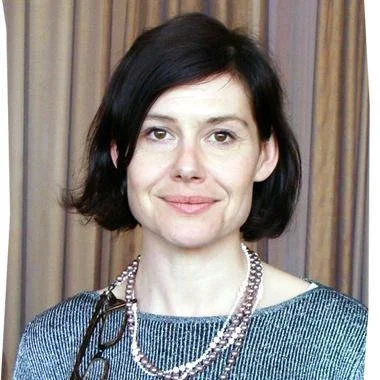
Mathilda Tham is a metadesigner who creates spaces and structures for change agency and imagination beyond a dominant paradigm of economic growth. After a PhD combining systems thinking, critical futures studies, sustainability and design, Mathilda Tham has led uncompromisingly systemic transdisciplinary research on housing and integration, the global fashion sector, regional circularity, an ageing society, and the value of the forest. Her work brings together scientific and artistic (including visual arts, creative writing, performance, singing and cooking) approaches, experience from activism, living through trauma, Buddhist practice and a love of learning (from figure skating to quantum physics).
Mathilda Tham is Professor in Design at Linnaeus University, Sweden, where she has co-created pioneering education programmes focused on design as change making, and affiliated with Goldsmiths, University of London. She is co-author of Earth Logic: Fashion Action Research Plan (2019, with Kate Fletcher), which has led to new initiatives in policy, media, education, and high-level industry dialogue. Mathilda Tham is co-founder of the Union of Concerned Researchers in Fashion, and was a board member of Mistra, the Swedish Foundation for Strategic Environmental Research. Mathilda currently leads the research project Earth Logic Design (funded by Kamprad Family Foundation), which develops and performs a new game plan, roles, practices, and indicators for design starting from relationships with Earth instead of economic growth.

Dr. Melisa Basol is a social psychologist, Cambridge PhD (Gates Scholar), and Forbes 30 Under 30 honouree. A pioneer of inoculation theory at scale, she led the largest prebunking campaigns to date, ahead of elections in Indonesia, the EU, and beyond, reaching over 250 million people. She co-developed the UN-backed "Go Viral!" game to combat COVID-19 misinformation and founded Pulse, an innovation lab for human-centred tech. She sits on Ofcom's advisory panel and teaches about digital manipulation in the age of AI at Sciences Po Paris. Her work has been featured in The Guardian, The Times, and The Washington Post.

Simeon Rose is a British creative director, author, and sustainability advocate. He is Brand Director at Faith in Nature, where he has worked since 2017, bringing a background of roughly two decades in advertising into purpose-driven business.
Rose is best known as the co-creator of Nature on the Board, a pioneering governance model that led Faith in Nature in 2022 to become the first company in the world to appoint Nature as a director, giving the natural world a formal voice and vote in corporate decision-making.
Through his writing, speaking, and his 2026 book Nature’s Boardroom, he advocates for embedding the “rights of nature” into business structures and scaling the idea of nature-inclusive governance across organisations globally.

Thomas Barlow has been an environmental and media rights activist for over two and a half decades. He cofounded Real Media, the Independent Media Association, and Impress Media Services, where he leads strategic operations. He also founded two festivals, two cooperatives, a charity, and several community organising organisations, all of which run to this day.
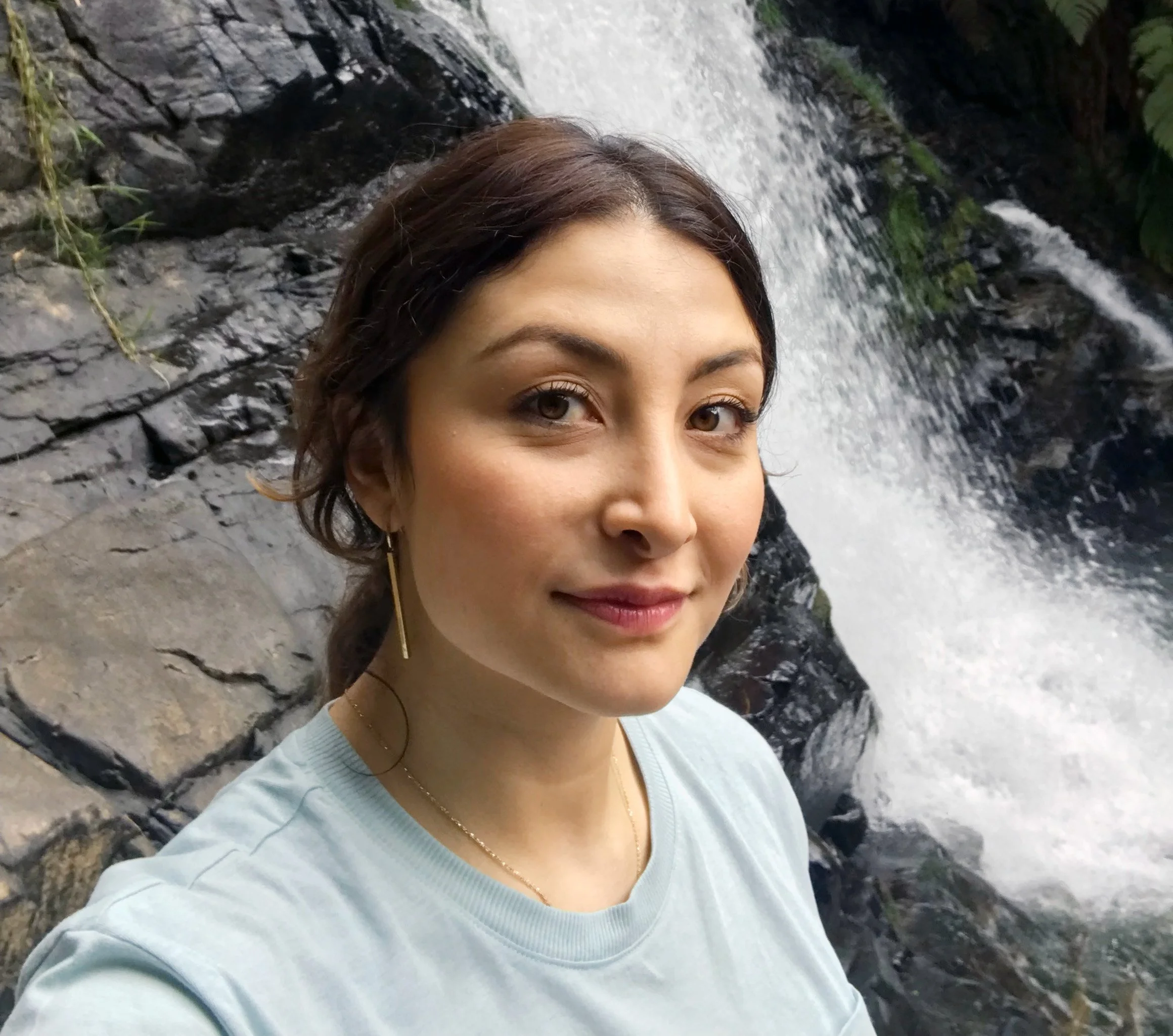
Dr Juliana Restrepo-Giraldo, PhD (she/her), is a Native Latin American designer, researcher, and educator based in Sweden. Grounded in Sumak Kawsay and decolonial feminist perspectives, her work explores embodied and performative ways of knowing. Through ritualized dialogues with everyday objects, she cultivates spaces for reflection, vulnerability, and collective wisdom.