
Welcome to a 4-week online metadesign exploration into the generative and transformative power of making a leap of mind and heart from consumption to connection. This caring, thought-provoking, playful journey offers a vibrant mix of scientific, artistic, activist and experiential approaches to working with systems change from the inside and out and back again.
Etymologically related to devour and destroy, the words “consumer” and “consumption” reflect and reproduce destructive, homogeneous, flattened ways of being in and with the world, which have spread from consumable products to the spheres of healthcare, education, culture, and media. Together with production, consumption sets up a reductive worldview of ‘take or make’.
This course asks: what ways of being, thinking, and doing might be possible if connection with ourselves, other people, species, and Earth were the highest guiding principle of engagement instead?
Decades of failed, top-down attempts to resolve the climate crisis have shown that it isn’t possible to solve the problems with the same kind of thinking that created them. This series of sessions answers the deep and urgent need for different ways of thinking and feeling to respond to complex, global challenges.
Each session includes working with metadesign systems frameworks, guided creative practice, examples from change work, community-building elements, and reflection, exploring relevance at personal, collective, societal, and planetary scales.
Course themes
1. Language, Communication, and Decision-Making
How language shapes perception, influences relationships, and opens or constrains possibilities for decision-making.
2. Home, Consumption, and Global Resources
How everyday choices in our households connect to resource use, environmental impact, and global systems.
3. Leadership and Ecological Intelligence
Rethinking leadership and decision-making through “earth logic”, aligning human systems with ecological principles and limits.
4. Love, Values, and Human Dignity
Exploring how care, meaning, and dignity, often excluded from formal decisions, can become powerful drivers of transformation.
What will you learn?
Consumption to Connections offers participants an advanced and accessible space for:
learning about complex interplays between social, cultural, economic and ecological systems and how they manifest from the personal to planetary scales.
exploring what kind of touch points we each have — as individuals, communities and organisations —to the polycrisis, manifesting interconnectedly as climate change, social injustice, mental ill-health.
exploring and rehearsing impactful ways to make change from exactly where we each are, including new language, new practices, new relationships, and new imagination.
Who is this for?
From Consumption to Connection is for people seeking impactful, meaningful ways to work with systems change from within. You may be working for an organization, independently, or be an activist. You may be a seasoned change maker in need of new perspectives, tools, inspiration, and community, or maybe someone who feels they have experiences that could be of value for changing the world but are not yet sure how. All we ask is that you arrive with curiosity, openness, and focus.
Sessions
11 June, 2 - 4 PM BST
Repatterning Everyday Worlds — From Consumption to Connection – opening panel
How does a mindset and heartset of consumption impact mental, social, economic, and planetary health? What is the promise of Connection as a space for leading impactful change from inside systems and transforming design, policy, education, industry, citizenship, and leadership?
With Simeon Rose (Nature on the Board, Faith in Nature), Dr. Melisa Basol (Pulselab, Inoculation against fake news), Thomas Barlow (Independent Media Association), Dr. Juliana Restrepo Giraldo (Buen Vivir Cosmology), Steffi Bednarek (Founder & Director Centre for Climate Psychology), Prof Mathilda Tham ( metadesigner and Professor in Design)

18 June, 2 - 4 PM BST
Food & fashion w/ Karishma Chugani Nankani
These tangible consumption areas give helpful trails to underlying themes of identity, belonging, as well as perceived and real inner and outer limits.
25 June, 2 - 4 PM BST
Language & Media w/ Vera Maeder
How can we purposefully use language to open thought and action spaces guided by connection? How can a mind and heartset of connection guide ways of being with media that is nourishing?
30 June, 2 - 4 PM BST
Decision-Making w/ Sally Sutherland
How can a spectrum from consumption to connection inform leadership, negotiation, and decision-making that is genuinely sensitive to plural needs?
Practical Details
Dates:
June 11, 18, 25, 30 — 2 PM - 4 PM BST (check your local timezone)
Pricing for the speaker event & 3-session training:
General Admission (covers the cost of the training) £75
Supporter (covers the cost of the training and supports someone to attend who otherwise could not) £95
Concession (for those on benefits or low income who could not otherwise attend the training) £50
Workshop Facilitators
Course hosted by
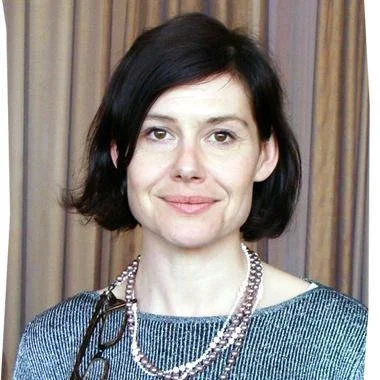
Mathilda Tham is a metadesigner who creates spaces and structures for change agency and imagination beyond a dominant paradigm of economic growth. After a PhD combining systems thinking, critical futures studies, sustainability and design, Mathilda Tham has led uncompromisingly systemic transdisciplinary research on housing and integration, the global fashion sector, regional circularity, an ageing society, and the value of the forest. Her work brings together scientific and artistic (including visual arts, creative writing, performance, singing and cooking) approaches, experience from activism, living through trauma, Buddhist practice and a love of learning (from figure skating to quantum physics).
Mathilda Tham is Professor in Design at Linnaeus University, Sweden, where she has co-created pioneering education programmes focused on design as change making, and affiliated with Goldsmiths, University of London. She is co-author of Earth Logic: Fashion Action Research Plan (2019, with Kate Fletcher), which has led to new initiatives in policy, media, education, and high-level industry dialogue. Mathilda Tham is co-founder of the Union of Concerned Researchers in Fashion, and was a board member of Mistra, the Swedish Foundation for Strategic Environmental Research. Mathilda currently leads the research project Earth Logic Design (funded by Kamprad Family Foundation), which develops and performs a new game plan, roles, practices, and indicators for design starting from relationships with Earth instead of economic growth.
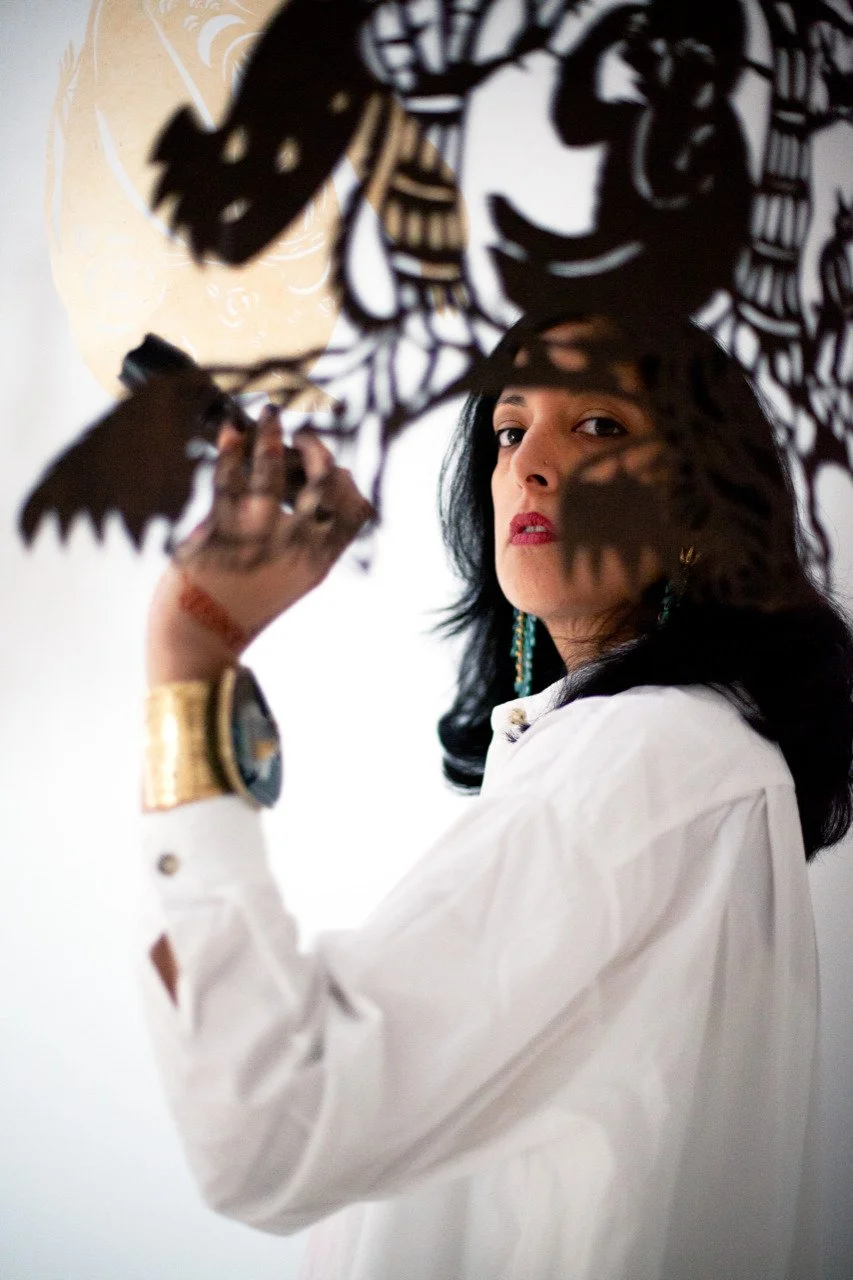
Karishma Chugani Nankani is a multidisciplinary artist. Having lived amidst different cultures and languages, her constant transformations lead her not to shedding old skins (like the snake), but rather to add on layers of knowledge and experience (like the turtle). Conceptually she works with the essence of human experience through storytelling, folklore, world mythologies and ecofeminism.
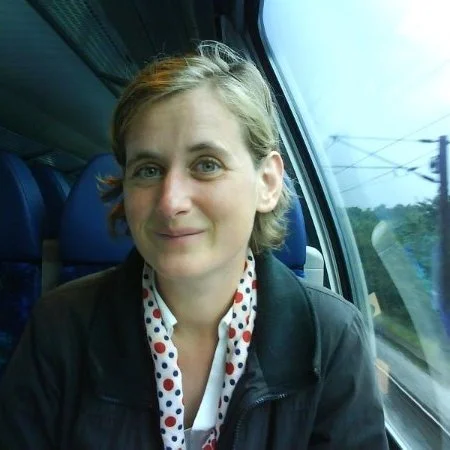
Vera Maeder works with choreography as extended practice. She is creating immersive and participatory artworks where the body is invited to think and thinking is invited to move. Under the umbrella of hello!earth, that she is the co-founder of, she has, over the past many years, walked the edges of the performative, expanding notions of the same. She co-created concepts for a diverse body of works- reaching from larger projects on community resilience to site& context specific works in cities, rural and green places, and works for gallery and theatre spaces both in DK and internationally.
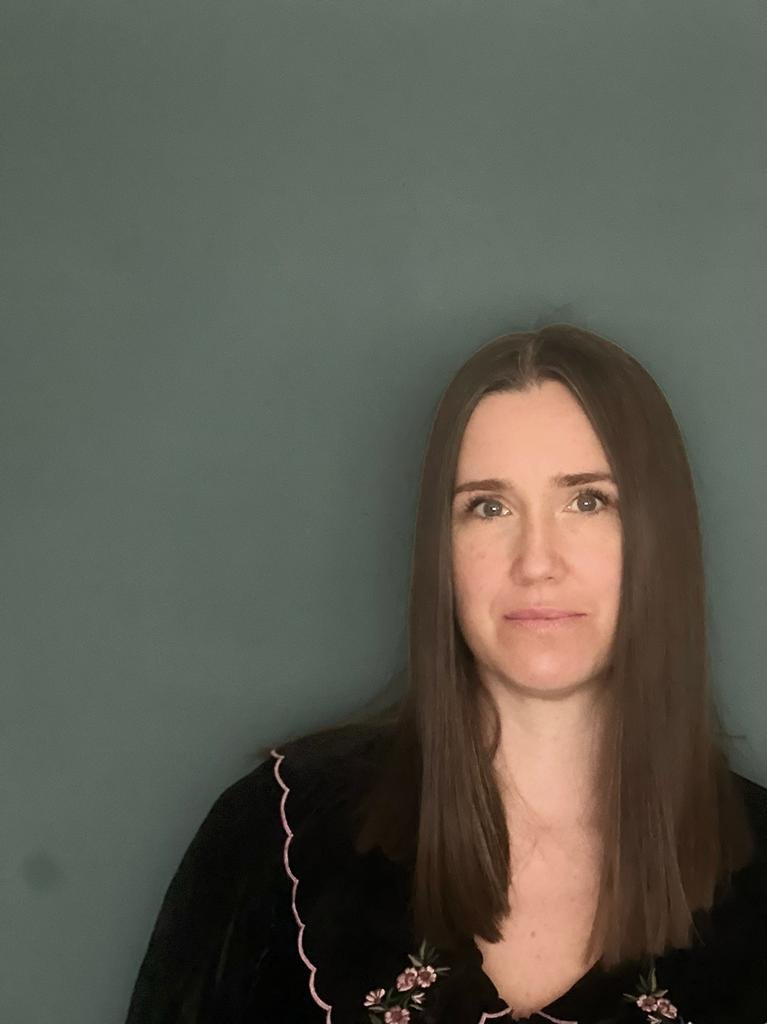
Dr. Sally Sutherland is Course Leader of the MA Sustainable Design and a Research Fellow at the University of Brighton. Her work critically examines inequities embedded in design systems and institutions, developing practice‑led approaches that respond to social injustice and the interdependence of human and planetary health.
Speakers
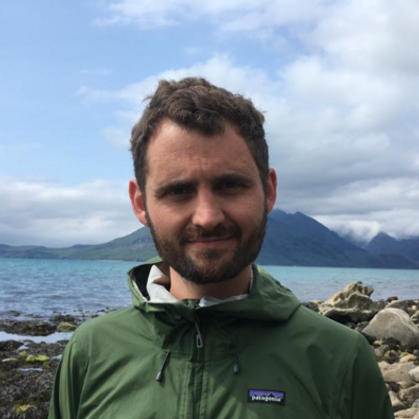
Simeon Rose is a British creative director, author, and sustainability advocate. He is Brand Director at Faith in Nature, where he has worked since 2017, bringing a background of roughly two decades in advertising into purpose-driven business.
Rose is best known as the co-creator of Nature on the Board, a pioneering governance model that led Faith in Nature in 2022 to become the first company in the world to appoint Nature as a director, giving the natural world a formal voice and vote in corporate decision-making.
Through his writing, speaking, and his 2026 book Nature’s Boardroom, he advocates for embedding the “rights of nature” into business structures and scaling the idea of nature-inclusive governance across organisations globally.

Dr. Melisa Basol is a social psychologist, Cambridge PhD (Gates Scholar), and Forbes 30 Under 30 honouree. A pioneer of inoculation theory at scale, she led the largest prebunking campaigns to date, ahead of elections in Indonesia, the EU, and beyond, reaching over 250 million people. She co-developed the UN-backed "Go Viral!" game to combat COVID-19 misinformation and founded Pulse, an innovation lab for human-centred tech. She sits on Ofcom's advisory panel and teaches about digital manipulation in the age of AI at Sciences Po Paris. Her work has been featured in The Guardian, The Times, and The Washington Post.

Thomas Barlow has been an environmental and media rights activist for over two and a half decades. He cofounded Real Media, the Independent Media Association, and Impress Media Services, where he leads strategic operations. He also founded two festivals, two cooperatives, a charity, and several community organising organisations, all of which run to this day.
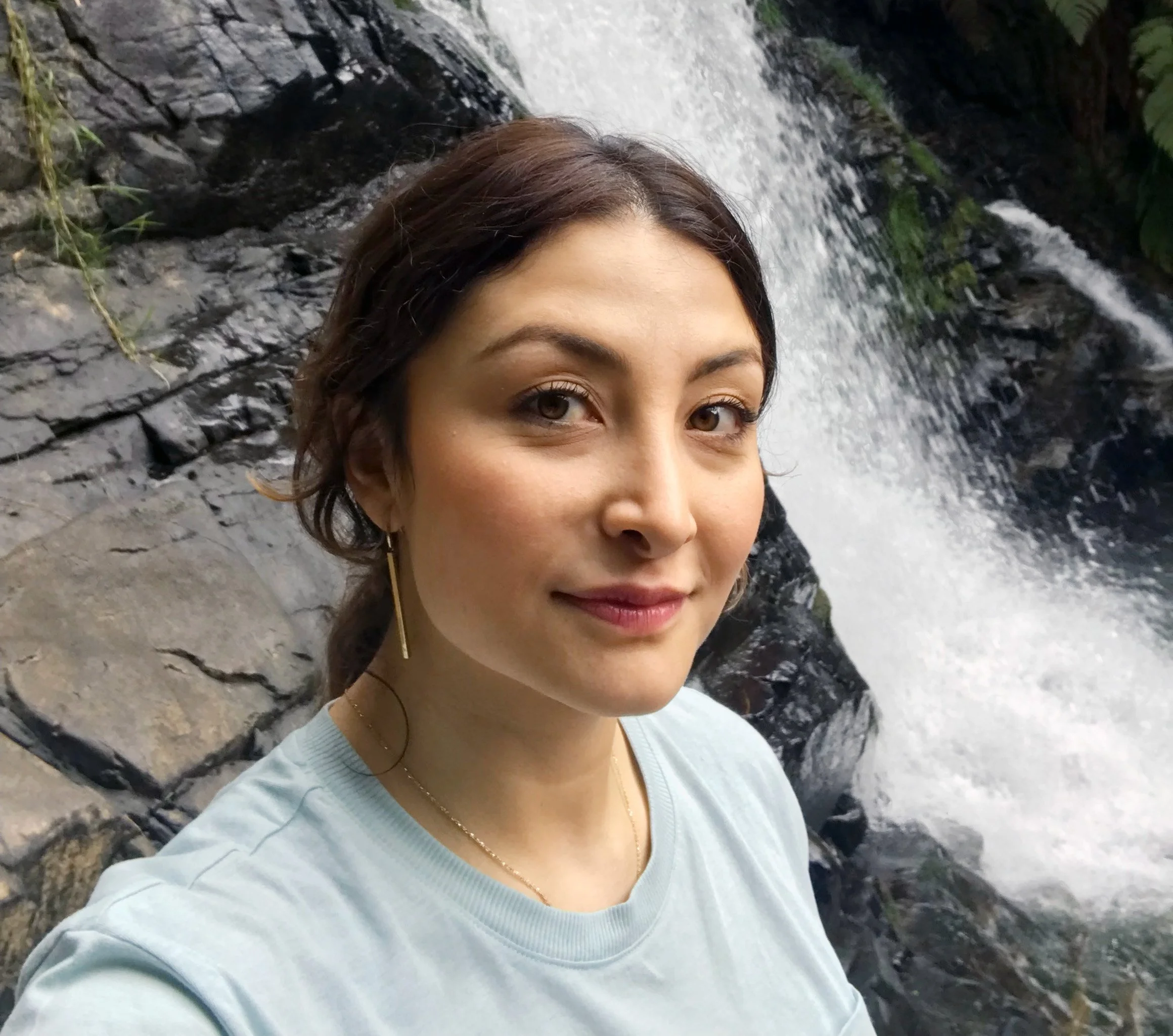
Dr Juliana Restrepo-Giraldo, PhD (she/her), is a Native Latin American designer, researcher, and educator based in Sweden. Grounded in Sumak Kawsay and decolonial feminist perspectives, her work explores embodied and performative ways of knowing. Through ritualized dialogues with everyday objects, she cultivates spaces for reflection, vulnerability, and collective wisdom.